Canva Vintage: A Timeless Script Font for Small Business Branding
Last Tuesday, I was helping a local candle maker update her jar labels—simple white kraft paper, black ink, and a hand-stamped logo that hadn’t changed in three years. She loved the warmth of her brand but kept hearing, “It looks homemade… in a good way—but also maybe *too* handmade?” That’s when we swapped her current script font for Canva Vintage. Within an hour, the new label felt like it belonged on a boutique shelf—not just a craft fair table. No redesign, no rebranding. Just one thoughtful typography choice.
What Makes Canva Vintage Feel So Effortlessly Polished?
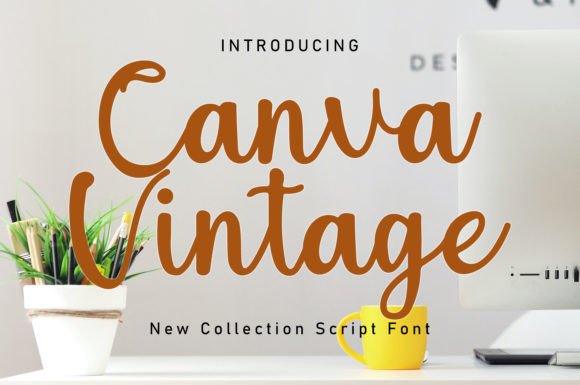
Canva Vintage is a premium script font from the Script Amp collection—a category known for expressive, personality-driven typefaces. It’s not overly ornate or fussy, but it carries undeniable elegance: soft curves, gentle contrast between thick and thin strokes, and subtle flourishes that feel intentional, not distracting. Think of it as handwriting you’d see in a well-loved recipe journal—warm, confident, and quietly refined.
Unlike many decorative scripts, Canva Vintage balances charm with clarity. The letterforms have generous spacing and open counters (the enclosed spaces inside letters like ‘a’ or ‘e’), which helps it stay legible even at smaller sizes—critical for product labels, business cards, or Instagram story text overlays.
Where It Shines in Real Business Materials
We tested Canva Vintage across six common small business touchpoints—and each time, it elevated perception without demanding extra design work:
- Product labels & packaging: On a lavender-scented soy candle jar, Canva Vintage used for the scent name (“Midnight Lavender”) added sophistication while keeping warmth. Customers noticed it immediately—even before reading the description.
- Thank-you cards & stickers: Printed on recycled kraft stock, the font gave handmade charm a professional finish. No more “cut-and-paste” energy—just sincerity with polish.
- Café menus & bakery boxes: Paired with a clean sans serif for body text, Canva Vintage worked beautifully for headers like “Today’s Specials” or “Our Signature Loaves.” It invited attention without shouting.
- Social media graphics: On Instagram posts and Pinterest pins, it held up well in thumbnail size—especially when used for short phrases like “Hand-poured • Small-batch • Made with care.”
- Logo design & shop banners: Used sparingly—as a wordmark or monogram—it created instant memorability. One beauty brand used it for their initials only (“E.L.”) alongside a minimalist icon, and saw more engagement on branded templates.
Typography That Builds Trust—Without Saying a Word
Here’s what most small business owners don’t realize: typography is one of the fastest ways to signal quality, consistency, and intentionality. When your packaging, website banner, and Instagram highlight all use the same carefully chosen script font, customers subconsciously register cohesion—even if they can’t name why.
Canva Vintage supports this because it’s versatile enough to feel personal, yet refined enough to avoid looking amateurish. It doesn’t try to be everything—it’s best used for headlines, logos, packaging titles, and short display text. It’s not meant for long paragraphs or fine print, and that’s okay. Great branding isn’t about using one font everywhere—it’s about choosing the right tool for each job.
Smart Pairings & Practical Tips
For maximum impact, pair Canva Vintage with a clean, neutral companion. We’ve had consistent success with:
- A modern sans serif (like Montserrat or Inter) for body copy, pricing, and ingredient lists—creates balance and improves readability.
- A light-weight serif (like Playfair Display Light) for elegant contrast—ideal for wedding-related businesses or luxury skincare brands.
- A second, simpler script (used very sparingly) for decorative accents—like tiny “&” symbols or border elements.
Before downloading or licensing: check what’s included. Canva Vintage typically offers OpenType features like ligatures and stylistic alternates—great for avoiding repetitive letter combinations in longer words. Confirm file formats (OTF/TTF/WOFF), commercial licensing terms (especially if selling digital templates or physical goods), and multilingual support if your audience includes non-English speakers.
Readability Matters—Especially Where It’s Least Obvious
That candle label? We printed Canva Vintage at 10 pt on matte kraft paper—and it held up. But we avoided using it below 8 pt on dark backgrounds or in low-resolution digital ads. For mobile-first visuals (like Instagram stories or Shopify banners), stick to short phrases and keep line spacing generous. If your product has tiny real estate—think tea bag tags or soap stamps—test print first. Some script fonts lose nuance at ultra-small sizes; Canva Vintage holds its shape better than most, but restraint is still wise.
It’s also worth noting: while Canva Vintage works beautifully in Canva’s editor (hence the name), it’s a fully licensed commercial font—you’re not limited to Canva’s platform. Use it in Adobe Illustrator for custom packaging, in Figma for web banners, or even in Cricut Design Space for cut-out vinyl decals.
At its core, Canva Vintage isn’t about chasing trends. It’s about giving your brand a voice that feels human, intentional, and quietly confident. Whether you’re printing 20 thank-you cards or launching a full e-commerce refresh, this script font delivers more than style—it delivers consistency, clarity, and calm professionalism. And sometimes, that’s exactly what your next customer notices first.