Angel Babyish: A Sweet Handwritten Font for Makers
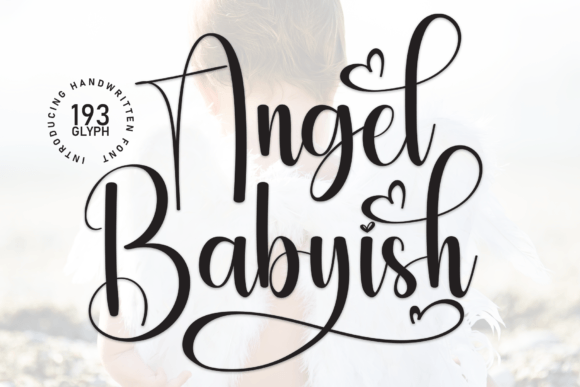
There’s that quiet moment—just after the wax has cooled on a new candle batch—when I open my design software and stare at a blank label template. I need something warm, something tender, something that whispers “handmade with care” before the customer even lifts the jar. That’s when I reach for Angel Babyish. It’s not just another script font—it’s a soft-spoken friend in my design toolkit, a handwritten font with gentle curves, natural rhythm, and a quiet confidence that feels both nostalgic and fresh.
Angel Babyish lives in the Script Amp category, but it doesn’t shout. Its charm is in its authenticity—the slight variation in stroke weight, the subtle bounce in its baseline, the way lowercase “a” and “g” have that friendly, rounded openness. It’s not overly ornate or fussy; it’s friendly, like handwriting you’d find on a thank-you note tucked into a boutique gift bag. As a maker who designs everything from greeting cards to digital planner pages, I’ve learned that this kind of warmth translates directly into how people feel about a product—even before they read a single word.
I first used Angel Babyish on a set of spring-themed candle labels—“Lavender Daydream,” “Honey & Thyme,” “Sunlit Linen.” Printed on kraft paper with a matte finish, the font gave each name a gentle, approachable personality. No sharp edges, no rigid spacing—just organic flow that matched the softness of the scents. Later, I applied it to printable wall art: a simple phrase—“Breathe Deeply”—centered on a cream background. The result felt calming, intentional, and quietly elegant. That’s the magic of Angel Babyish: it elevates everyday words without demanding attention.
It shines brightest as a display font. Think short phrases, names, titles, and decorative wording—not long paragraphs. On wedding invitation suites, it works beautifully for couple names or “Mr. & Mrs.” headers, especially when paired with a clean sans serif (like Montserrat or Poppins) for body text. For boutique tags, I use it for product names—“Hand-Poured Soy Candle,” “Small Batch Lavender Soap”—then switch to a light-weight serif for ingredients or care instructions. That contrast keeps things legible while letting Angel Babyish do the emotional heavy lifting.
Readability matters—especially when cutting vinyl or printing tiny stickers. I’ve tested Angel Babyish at 8pt on 1.5-inch round stickers (for tea towel tags), and it held up well—though I avoid using it smaller than 6pt for physical labels. For Cricut and Silhouette users: it cuts cleanly at 12pt and above, especially when converted to outlines first. On mockup previews—whether for Etsy listings or social media graphics—the font adds instant handmade appeal. Customers tell me the packaging “feels special,” and I know part of that comes from typography that looks lovingly made, not mass-produced.
Seasonal work is where Angel Babyish really sings. For holiday tags, I pair it with red-and-cream striped borders and a bold sans serif for dates (“Christmas Eve • 2024”). For Easter egg dye kits, it wraps playfully around a hand-drawn bunny illustration. And for summer farmer’s market tote bags? A single line—“Grown With Love”—in Angel Babyish, centered over a linen-textured background, says more than any logo ever could.
As a digital printable creator, I use it across planner inserts, habit trackers, and affirmation cards. Its natural irregularity makes each page feel personal—not templated. When designing printable wall art for nurseries or cozy reading nooks, I lean into its gentle energy: “Little One,” “Dream Softly,” “You Are Enough.” These aren’t slogans—they’re quiet promises, and Angel Babyish delivers them with sincerity.
Before using Angel Babyish commercially—on mugs, shirts, or SVG files—I always check what’s included. It comes with standard OpenType features: stylistic alternates, ligatures, and swashes that add subtle flair without clutter. The file formats (OTF, TTF, WOFF) make it easy to use across design apps, web platforms, and cutting machines. And yes—it’s licensed for commercial use, so I can confidently embed it in digital templates or print it on physical goods without hesitation.
Font pairing is where intention meets impact. My go-to combo? Angel Babyish + a neutral sans serif (like Lato or Inter) for balance. For vintage-inspired stationery, I’ll layer it over a delicate serif (such as Playfair Display Light). Occasionally, I’ll use it alongside another handwritten font—but only one other, and only when their rhythms complement rather than compete. Too many scripts blur the message; Angel Babyish is sweet enough to stand out on its own.
What I love most is how Angel Babyish supports brand consistency without feeling repetitive. Whether it’s on a sticker sealing a handmade soap box, embroidered onto a cotton drawstring bag, or floating softly across a digital download cover—it carries the same gentle voice. That continuity helps customers recognize my work across platforms and products, building quiet trust over time.
If you're choosing a premium font for your handmade shop, ask yourself: does it reflect the heart behind your work? Does it feel true to your materials, your process, your values? Angel Babyish does that for me—not because it’s trendy, but because it’s honest. It doesn’t try to be anything other than what it is: a sweet, friendly, handwritten font made for makers who believe beauty lives in the details.